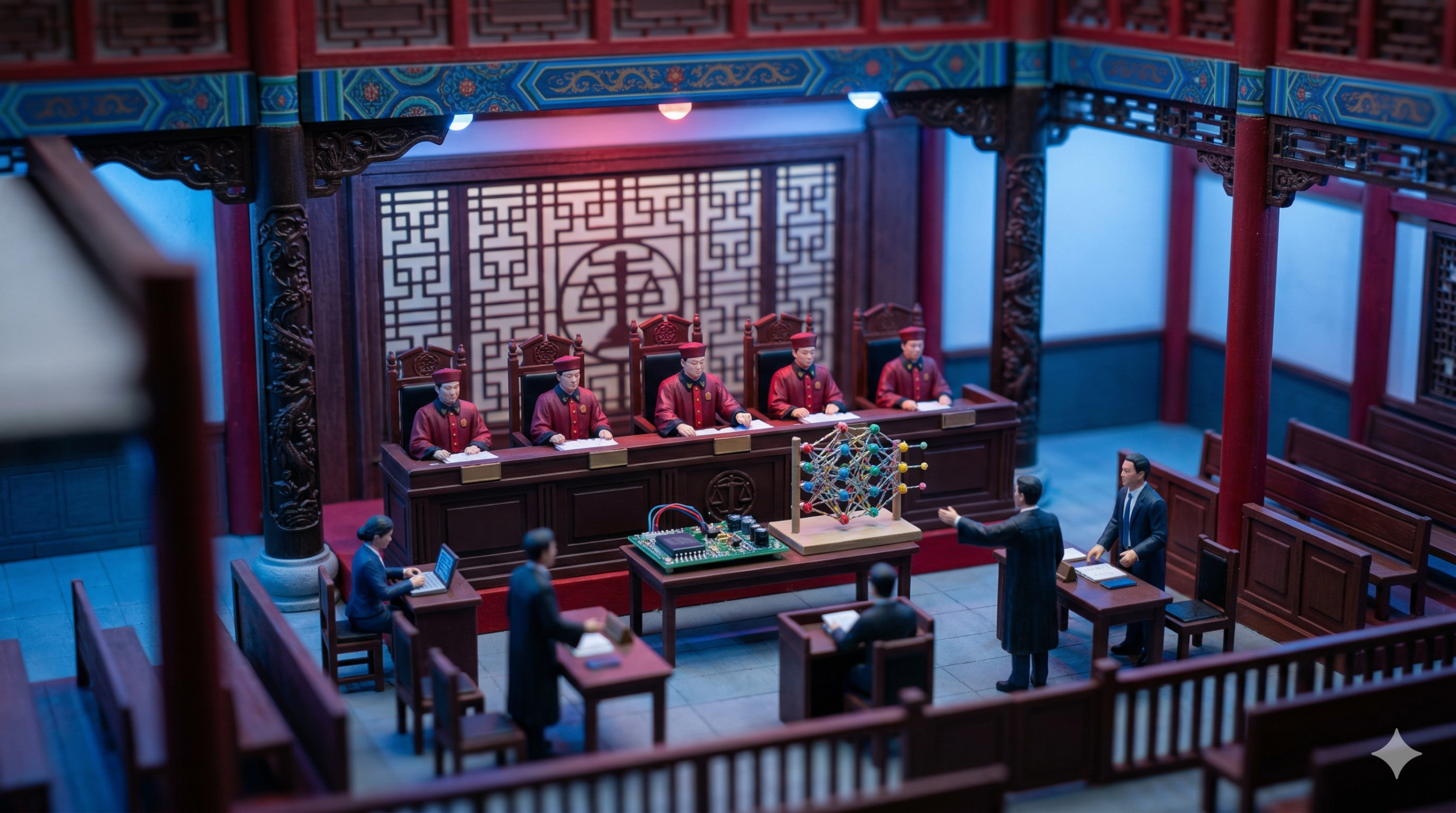
Lead: China’s National Intellectual Property Administration (CNIPA) released its 2026 Intellectual Property Administrative Protection Work Plan on April 10, 2026. The comprehensive plan, structured across 12 priority areas, places significant emphasis on establishing new administrative mediation and arbitration rules for Standard Essential Patent (SEP) disputes and accelerating comprehensive trademark law reform. These measures reflect China’s strategic response to escalating international patent conflicts in the 5G and AI technology sectors.
- Overview of CNIPA’s 2026 Work Plan
- SEP Regulation Transformation—New Administrative Mediation and Arbitration Framework
- Trademark Law Comprehensive Reform Acceleration
- Response to Emerging Technology Sectors—AI and 5G Innovation
- Enhanced Regulatory Oversight on Foreign Technology—Strict Management of Technology Export and IP Transfer
- Strategic Implications for Japanese Enterprises
- International Context and Future Trajectory
- Conclusion
- Sources
Overview of CNIPA’s 2026 Work Plan
The 2026 plan released by CNIPA comprises 12 principal items (I through XII) that form a cohesive intellectual property strategy framework. Beyond traditional rights protection, the plan signals substantive reform of China’s regulatory infrastructure for intellectual property administration.
SEP Regulation Transformation—New Administrative Mediation and Arbitration Framework
The most significant aspect of this year’s plan is the establishment of new rules governing SEP disputes. Under Item III (Enhancement of Patent Dispute Administrative Mediation), CNIPA explicitly commits to “research and formulation of administrative mediation and arbitration rules and guidelines for Standard Essential Patent disputes” (标准必要专利纠纷行政裁决、调解规则).
This initiative responds directly to the increasing complexity of patent litigation in telecommunications and AI sectors. As domestic enterprises such as Huawei and OPPO have expanded their patent declarations with international standard-setting bodies (including 3GPP), concurrent disputes with foreign patent holders over SEPs have intensified. The formalization of administrative mediation and arbitration mechanisms reflects a strategic shift toward faster and more flexible dispute resolution channels.
Historically, China’s patent dispute resolution has been dominated by judicial proceedings in courts. The introduction of formal administrative mediation and arbitration pathways represents a structural evolution, offering expedited processing while potentially providing greater administrative oversight of SEP licensing outcomes.
Trademark Law Comprehensive Reform Acceleration
Item IV of the plan, addressing enhancement of trademark usage management, explicitly mandates the acceleration of comprehensive trademark law revision (加快商标法全面修订). China’s Trademark Law has remained substantially unchanged since 2019, leading to identified gaps in addressing digital content, modern brand strategies, and evolving enforcement needs.
The plan’s formal commitment to expedited comprehensive revision suggests forthcoming expansion of trademark protection scope, intensified enforcement against fraudulent registrations, and enhanced protection mechanisms for geographical indications, particularly for agricultural products.
Response to Emerging Technology Sectors—AI and 5G Innovation
The plan explicitly prioritizes emerging sectors including artificial intelligence, with Item IX addressing protection in key technology fields and critical periods. This indicates CNIPA’s intention to address intellectual property attribution for AI-generated works, accelerate patent rights for deep learning innovations, and develop regulatory frameworks for next-generation technologies.
This evolution reflects CNIPA’s strategic pivot from traditional manufacturing and telecommunications-focused intellectual property policy toward next-generation technology domains including generative AI and metaverse applications.
Enhanced Regulatory Oversight on Foreign Technology—Strict Management of Technology Export and IP Transfer
The plan establishes a framework for strictly managing technology exports and intellectual property transfer overseas in coordination with the Ministry of Commerce. While framed as a protective measure, this approach signals tighter restrictions on foreign enterprise access to Chinese intellectual property databases and reinforced mechanisms preventing technology transfer abroad.
In strategically critical sectors such as 5G and AI technologies, implementation of prior government approval requirements for IP transfer represents a substantive strengthening of administrative control over knowledge asset flows.
Strategic Implications for Japanese Enterprises
Japanese companies in telecommunications equipment, automotive electronics, and industrial robotics sectors maintain significant SEP patent portfolios targeting the Chinese market. The formalization of administrative mediation procedures for SEP disputes carries several strategic implications.
First, the establishment of expedited administrative mediation creates opportunities for faster rights enforcement compared to prolonged judicial processes, yet simultaneously introduces risks of pressure toward compromise during administrative proceedings. Second, comprehensive trademark law reform will necessitate reassessment of trademark protection scope for Japanese enterprises in China, potentially requiring supplementary protective registrations. Third, the strict technology transfer management mandate may complicate the process of transferring intellectual property development outcomes from Chinese operations to Japanese headquarters, requiring enhanced coordination with Chinese government approval mechanisms.
International Context and Future Trajectory
The plan published on CNIPA’s official website demonstrates China’s intention to establish autonomous regulatory frameworks that operate in parallel with multilateral trade agreements including WTO and CPTPP provisions on intellectual property harmonization.
The introduction of SEP administrative mediation rules can be interpreted as China positioning a government-led, mediation-oriented model against the market-competition-based SEP licensing approaches increasingly favored by the United States and European nations. This reflects China’s broader strategic objective of establishing more assertive participation in international intellectual property dispute resolution mechanisms, including potential future roles in WIPO and ITC proceedings.
Conclusion
CNIPA’s 2026 work plan transcends a conventional administrative notice regarding intellectual property protection. It represents a strategic action plan positioning China to exercise greater control over intellectual property regulation frameworks in the digital and AI era. The comprehensive regulatory restructuring of SEP disputes, trademark protection, and emerging technology domains constitutes a pivotal transition requiring substantial strategic recalibration for Japanese enterprises conducting substantial business operations in China.
Sources
- National Law Review – “China’s National Intellectual Property Administration Releases 2026 Intellectual Property Administrative Protection Work Plan”
- China National Intellectual Property Administration (CNIPA) Official Website
この記事について
パテント探偵社 編集部
知的財産の世界で起きている出来事を、ジャーナリズムの手法で報道・分析する独立メディア。特許番号・法的根拠・当事者名を正確に記述しながら、専門家以外にも読みやすい記事を届けています。掲載内容は法的アドバイスではありません。


コメント