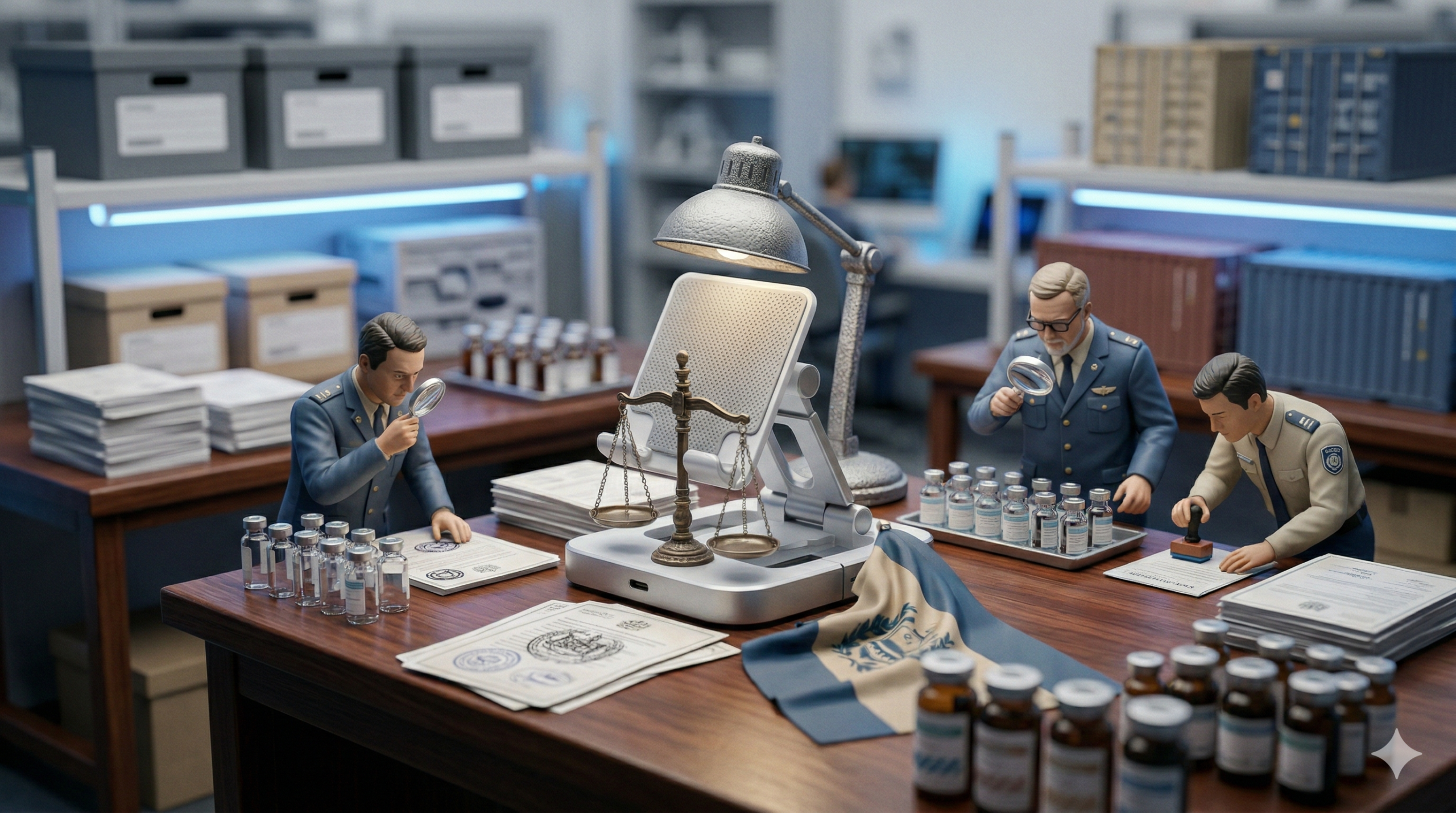
On April 2, 2026, President Trump signed a Proclamation imposing a 100% tariff on patented pharmaceuticals, their active pharmaceutical ingredients (APIs), and key starting materials imported into the United States. The legal basis is Section 232 of the Trade Expansion Act of 1962, invoked following a Commerce Department investigation that found patented pharma imports threaten U.S. national security. The action marks the first time patent status has been used as a criterion for imposing trade tariffs—a collision of two regulatory regimes that have traditionally operated in separate spheres.
Tariff Structure and Timeline
The Proclamation covers products listed in the FDA’s Orange Book (approved drugs) or Purple Book (licensed biologics) that are subject to a valid, unexpired U.S. patent, along with their APIs and key raw materials. The 100% tariff replaces existing duty rates for covered products.
According to Crowell & Moring’s analysis, tariffs take effect on July 31, 2026 (120 days from signing) for most importers. Seventeen major pharmaceutical companies listed in Annex III of the Proclamation receive an extended deadline of September 29, 2026 (180 days), providing additional time to negotiate pricing and onshoring agreements.
Reduced Rates for Trade Deal Countries
The Proclamation establishes a tiered framework for allied nations. Products originating from the EU, Japan, South Korea, Switzerland, and Liechtenstein face a 15% tariff instead of 100%. The United Kingdom receives a separate reduced rate under the bilateral pharmaceutical agreement concluded as part of the U.S.-UK Economic Prosperity Deal in June 2025. All other countries face the full 100% rate.
For Japanese pharma companies such as Takeda, Eisai, Astellas, and Daiichi Sankyo, the 15% rate represents a significant new cost burden on U.S.-bound exports. Although these companies maintain U.S. manufacturing operations, the tariffs on APIs and starting materials—often sourced from India or China and processed in Japan before export—raise complex questions about origin rules and HTSUS classification.
The MFN Pricing Escape Valve
The most structurally significant element of the Proclamation is the mechanism for achieving a 0% tariff rate. As Crowell & Moring details, companies that enter into both a Most Favored Nation (MFN) pricing agreement with the Department of Health and Human Services (HHS) and an onshoring agreement with the Department of Commerce receive a 0% tariff through January 20, 2029. Companies that conclude only an onshoring plan face an additional 20% surcharge on top of the applicable rate.
The MFN pricing agreement requires companies to align U.S. drug prices with those in other developed nations—effectively using tariff pressure as leverage to achieve pharmaceutical price regulation without legislation. This represents a novel fusion of trade policy and healthcare policy, bypassing the traditional Congressional route for drug pricing reform.
Exemptions: Generics, Orphan Drugs, and Specialty Products
Generic pharmaceuticals, biosimilars, and their associated ingredients are exempt from the tariffs—for now. The administration has committed to reassessing this exemption within one year. Additional exemptions cover orphan drugs, animal health products, nuclear medicines, plasma-derived therapies, fertility treatments, cell and gene therapies, antibody-drug conjugates (ADCs), and CBRN medical countermeasures, provided they originate from trade deal countries or meet an urgent public health need.
Why Patent-Based Tariffs Are Unprecedented
Section 232 has previously been applied to steel, aluminum, and related industrial inputs. Extending it to pharmaceuticals is itself novel, but conditioning tariff liability on patent status introduces a qualitatively different dimension. Patent rights and tariff obligations have historically existed in separate legal universes: patents grant exclusive rights enforceable through infringement litigation and ITC exclusion orders, while tariffs regulate the flow of goods at the border irrespective of IP status.
The new regime creates a structural link between the two. Whether a product is subject to a 100% tariff now depends on whether a valid U.S. patent covers it. This raises questions that current trade law is not designed to answer: What happens when a patent expires or is invalidated? How do supplementary protection certificates or patent term extensions interact with tariff classifications? Could patent holders strategically maintain or abandon patents to affect competitors’ tariff obligations?
Looking Ahead
The White House reports that the impending tariffs have already spurred approximately $400 billion in new domestic investment commitments from pharmaceutical companies. Commerce has 90 days to report to the President on negotiations progress, and the one-year reassessment of the generics exemption will be a critical inflection point.
Legal challenges are anticipated. The scope of Section 232 authority has been litigated in the Court of International Trade and the Federal Circuit in connection with steel and aluminum tariffs. Conditioning tariff rates on patent validity introduces novel constitutional and administrative law questions that may attract judicial scrutiny.
This Proclamation is, at its core, a policy experiment: using the coercive power of trade law to reshape pharmaceutical pricing, supply chains, and domestic manufacturing—all filtered through the lens of patent ownership. The long-term consequences will depend on how companies, courts, and trading partners respond. For a related analysis of how U.S. policy is reshaping the intersection of IP and competition law, see our coverage of the DOJ’s recent brief on SEP antitrust issues in Samsung v. Netlist.
この記事について
パテント探偵社 編集部
知的財産の世界で起きている出来事を、ジャーナリズムの手法で報道・分析する独立メディア。特許番号・法的根拠・当事者名を正確に記述しながら、専門家以外にも読みやすい記事を届けています。掲載内容は法的アドバイスではありません。


コメント