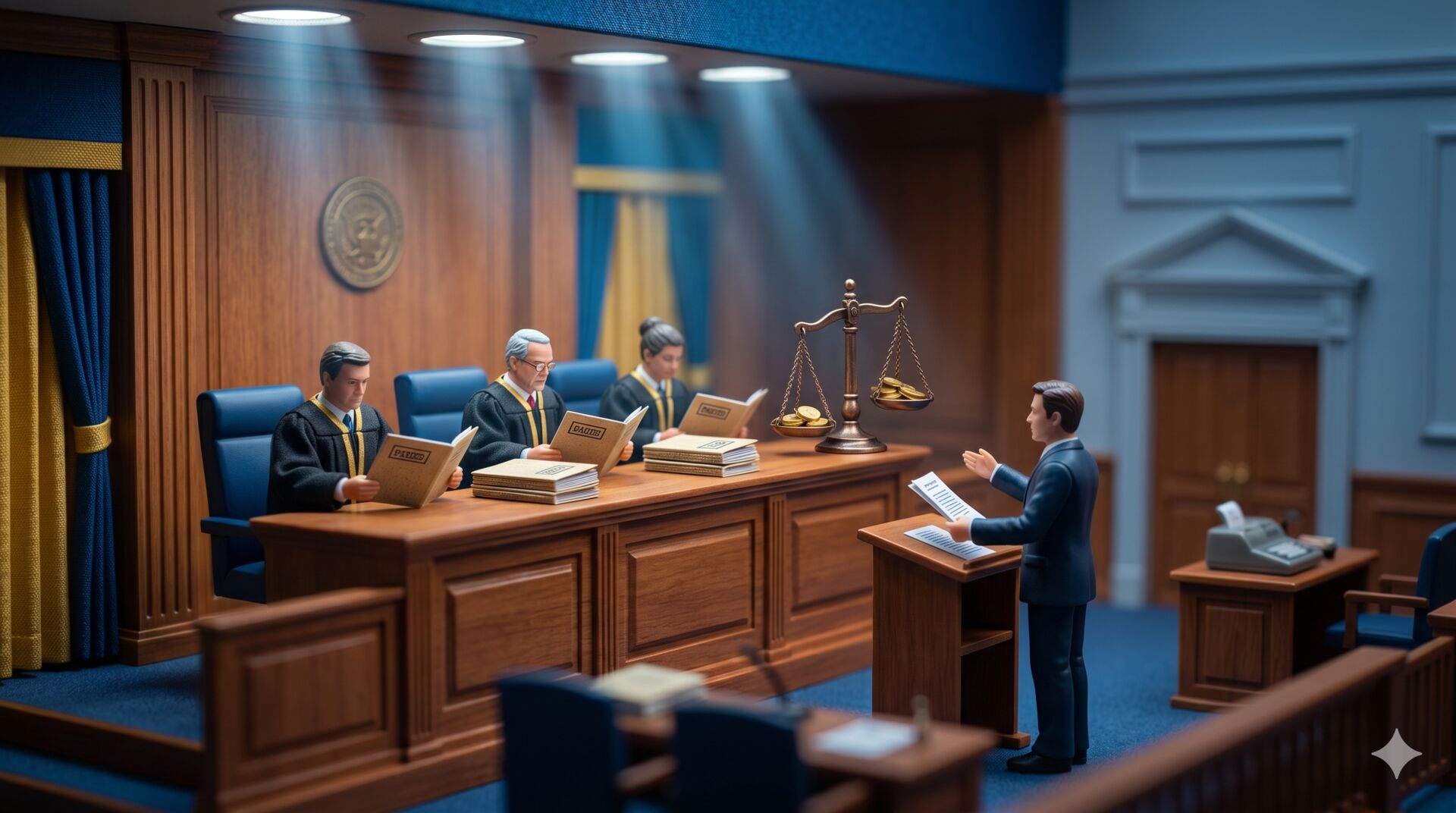
The United States Patent and Trademark Office (USPTO) signed an Official Gazette Notice on April 1, 2026, establishing a new procedure that allows patent owners to submit written arguments contesting a substantial new question of patentability (SNQ) before the Office decides whether to order ex parte reexamination. The procedure took effect for reexamination requests filed on or after April 5, 2026.
Under the new procedure, patent owners have 30 days from service of the reexamination request to file a pre-order paper of up to 30 pages, with no petition or fee required. The paper must focus on why the prior art teachings cited in the request are insufficient to raise an SNQ. Third-party requesters may respond only in limited circumstances by filing a petition under 37 CFR 1.182 with the associated fee, subject to a 10-page cap.
Context: A Surge in Reexaminations Driven by IPR Restrictions
The USPTO cited a recent increased volume of ex parte reexamination requests as the rationale for the change. That volume increase flows directly from Director John Squires’s restriction of inter partes review (IPR), which has driven challengers to use ex parte reexamination as an alternative path to invalidating patents. The Office recorded 223 ex parte reexamination filings in Q1 FY2026 alone, an annualized rate approaching 900. Director Squires himself testified before Congress in March 2025 that reexamination remains available as a substitute for the reduced availability of IPR and PGR proceedings.
Under prior practice, the patent owner’s first opportunity to be heard came only after the Office had already found an SNQ and ordered reexamination to proceed. The pre-order paper allows the patent owner to frame the SNQ threshold issue before the proceeding begins, a materially less costly intervention than defending through a full reexamination.
Regulatory Question: Emergency Waiver Instead of Rulemaking
The new procedure raises a doctrinal question. Two existing regulations appear to stand in its way. 37 CFR 1.530(a) provides that no statement or other response by the patent owner in an ex parte reexamination proceeding shall be filed prior to the SNQ determination, and directs that any premature filing will not be acknowledged or considered, and will be returned or discarded. 37 CFR 1.540 similarly provides that no submissions beyond those in the post-order sequence will be considered prior to examination.
Rather than amending these regulations through the Administrative Procedure Act’s notice-and-comment process, the Director is waiving them under 37 CFR 1.183, which permits suspension of regulatory requirements in an extraordinary situation, when justice requires. The Notice identifies the extraordinary situation as the increased volume of reexamination requests. The Notice further states that should the pre-order papers prove helpful, the Office will consider revisions to the rules, implicitly acknowledging the waiver is a stopgap rather than a durable legal foundation.
The principle from Accardi v. Shaughnessy, 347 U.S. 260 (1954), and Service v. Dulles, 354 U.S. 363 (1957), holds that agencies are bound by their own regulations until those regulations are properly amended. Whether a 37 CFR 1.183 emergency waiver satisfies that standard remains an open question.
Practical Implications
For patent owners, the new procedure is a meaningful improvement: an early opportunity to argue against reexamination before the proceeding commences. Practitioners should prepare to file a focused 30-page response within 30 days of service. For challengers, typically accused infringers seeking to invalidate a patent, the risk of pre-order dismissal raises the cost-benefit calculus of filing ex parte reexamination requests, particularly where the prior art case is borderline.
Taken together with the ongoing shift toward discretionary IPR denials, the new pre-order procedure is the latest development in a broad reconfiguration of post-grant patent challenge practice under Director Squires.
この記事について
パテント探偵社 編集部
知的財産の世界で起きている出来事を、ジャーナリズムの手法で報道・分析する独立メディア。特許番号・法的根拠・当事者名を正確に記述しながら、専門家以外にも読みやすい記事を届けています。掲載内容は法的アドバイスではありません。


コメント