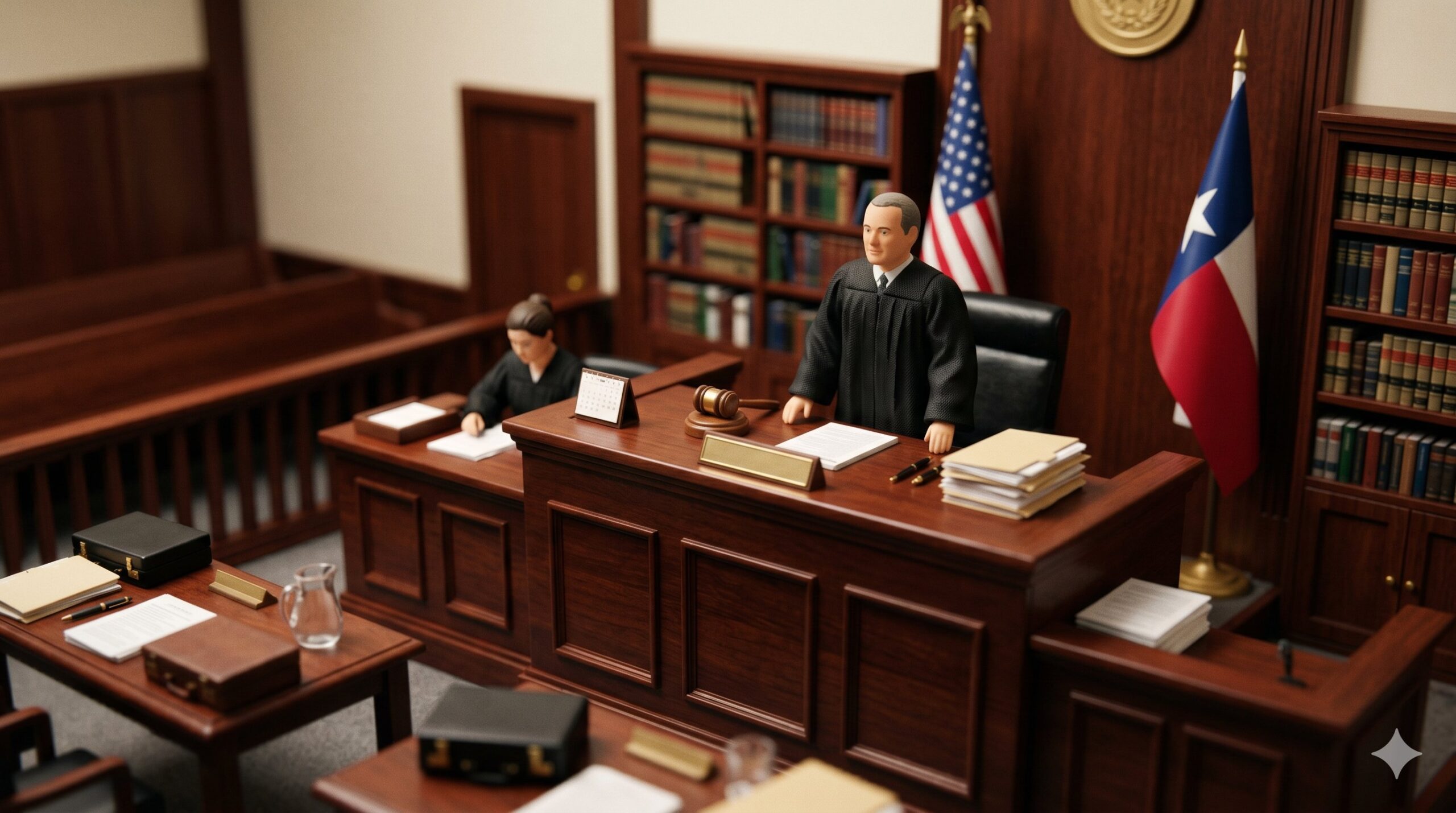
U.S. District Judge Alan Albright has confirmed that he will leave the Western District of Texas at the end of August 2026. In comments to Bloomberg Law, Albright said he misses life as a trial lawyer and plans to return to private practice. His departure marks the definitive close of the most consequential patent-venue experiment of the past decade and will force practitioners to fundamentally rethink their forum strategy.
Albright Patent Docket and the Rise of Waco
Albright joined the WDTX in 2018 and quickly distinguished himself by offering plaintiff-friendly scheduling, hands-on case management, and a reputation for moving cases to trial faster than most federal venues. By 2020 and 2021, roughly one in five U.S. patent cases was filed in Waco’s single-judge division, an extraordinary concentration driven in part by non-practicing entities seeking a favorable forum for licensing disputes.
That arrangement ended in July 2022 when Chief Judge Orlando Garcia issued a standing order distributing new Waco patent filings randomly among twelve WDTX judges. Albright subsequently transferred from Waco to Austin, where he has presided since. The policy change significantly reduced the Waco concentration, though Albright continued to attract substantial patent dockets in Austin.
Departure and Its Immediate Consequences
Albright’s exit is expected to leave a large backlog of cases for his colleagues. As of last September, the WDTX carried 129 civil cases pending for three years or longer, and roughly 70 percent of those belonged to Albright. Parties in those cases will face reassignment to other WDTX judges, creating uncertainty over trial schedules, existing discovery orders, and court-specific procedural preferences that may differ meaningfully from Albright’s approach.
Where Will Patent Cases Go Next
The post-Albright venue landscape is likely to consolidate around existing alternatives rather than create a new single dominant forum. The District of Delaware remains the highest-volume patent jurisdiction in absolute terms. The Eastern District of Texas continues to process a substantial docket. The Northern District of California is increasingly attractive to technology-sector litigants. The District of New Jersey has seen growth in pharmaceutical patent cases.
The Supreme Court’s 2017 decision in TC Heartland LLC v. Kraft Foods Group Brands LLC substantially narrowed plaintiff-friendly venue selection by limiting patent suits to districts where the defendant is incorporated or has a regular and established place of business. This structural constraint means that no single judge or division is likely to replicate the Waco concentration.
Practical Implications for Patent Litigants
For patent owners and NPEs that built forum strategy around Albright’s divisions, immediate reassessment is essential. Key variables include the patent-case inclinations of successor judges in the WDTX, whether the district will continue Albright’s expedited scheduling practices, and how other districts’ Markman and trial timelines compare.
For defendants, the practical patent litigation risk profile of the WDTX changes materially, affecting transfer motion strategy and the calculus around early settlement. Albright’s eight-year tenure created a body of local patent practice that is now effectively archived. The next phase of U.S. patent venue competition begins without a dominant incumbent judge.
この記事について
パテント探偵社 編集部
知的財産の世界で起きている出来事を、ジャーナリズムの手法で報道・分析する独立メディア。特許番号・法的根拠・当事者名を正確に記述しながら、専門家以外にも読みやすい記事を届けています。掲載内容は法的アドバイスではありません。


コメント