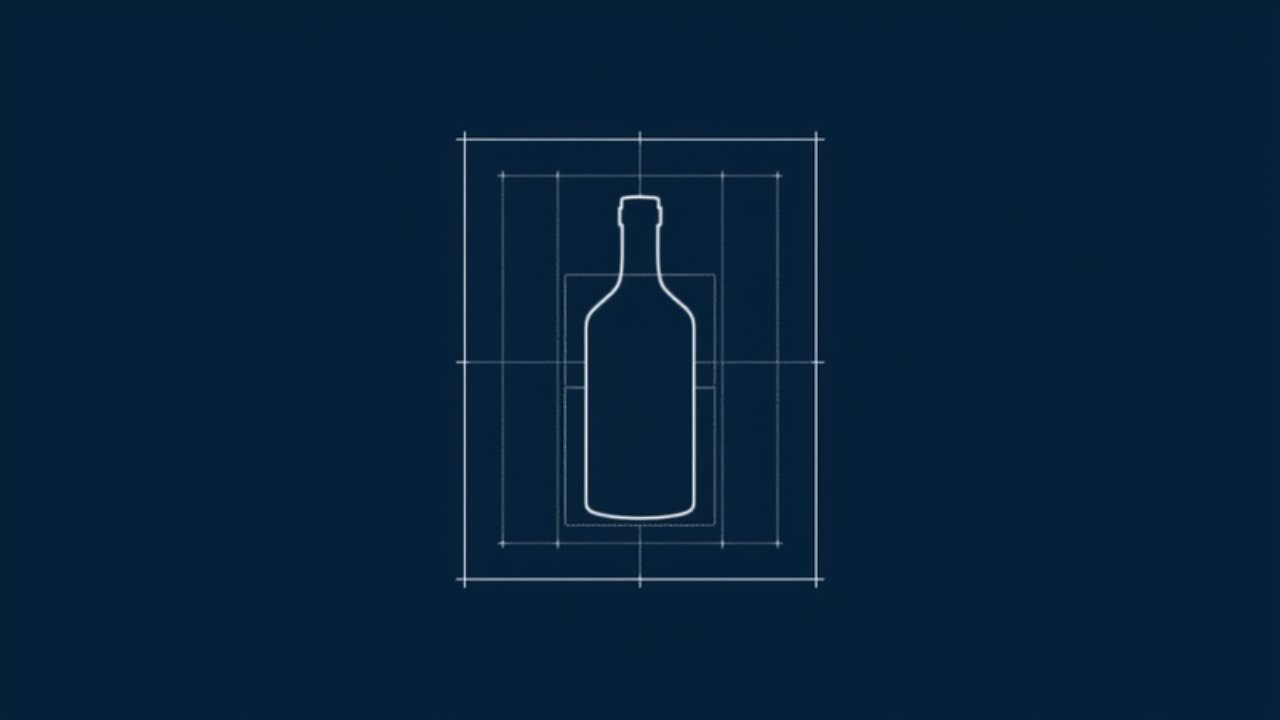
Most people know that logos and brand names can be trademarked. But what about the shape of a bottle?
Today I’m investigating one of the most famous examples of what’s called a “three-dimensional trademark” — the Coca-Cola Contour Bottle. That iconic hourglass silhouette isn’t just a design choice. In Japan, the United States, and dozens of other countries, it’s legally registered intellectual property. And the story of how it got there — including a court battle that reversed a patent office rejection — is more dramatic than you might expect.
- Coca-Cola’s IP Portfolio: 130 Years in the Making
- The Birth of the Contour Bottle (1915)
- What Is a Three-Dimensional Trademark?
- The Legal Battle: Rejection, Appeal, and Reversal
- What the Trademark Protects — and What It Doesn’t
- Other Three-Dimensional Trademarks in Japan
- A Century of Strategy — What This Case Really Teaches Us About IP
Coca-Cola’s IP Portfolio: 130 Years in the Making
To understand what makes the Contour Bottle remarkable, it helps to know the full arc of Coca-Cola’s intellectual property history.
Coca-Cola was born in 1886 at Jacob’s Pharmacy in Atlanta, Georgia. The drink was invented by pharmacist John Pemberton, and it was his bookkeeper, Frank Robinson, who came up with the name — combining coca (from the coca leaf) and cola (from the kola nut). Robinson also designed the flowing script logo, reasoning that two capital C’s would look striking in advertising. That logo was registered as a US trademark in 1893 — over 130 years ago.
By the early 1900s, Coca-Cola had built a multi-layered IP strategy: the Coca-Cola wordmark, the “Coke” trademark (US-registered in 1945), trade secrets protecting the flavor formula, and eventually, the shape of the bottle itself.
The Birth of the Contour Bottle (1915)
The immediate trigger for creating the Contour Bottle was rampant counterfeiting. In the early 1900s, dozens of imitator brands flooded the market. In 1906, Coca-Cola redesigned its label to differentiate itself, but bottles sold in barrels of ice water had labels that peeled off entirely.
Coca-Cola’s response was a fundamental shift: instead of relying on a label, make the bottle itself the brand. In 1915, the company held a design competition open to US glass manufacturers. The brief was extraordinary: design a bottle so distinctive it could be identified by touch alone in the dark — or even by looking at a broken shard on the ground.
The winning design came from the Root Glass Company in Terre Haute, Indiana. Designer Earl Dean reportedly drew inspiration from a cocoa pod when sketching the distinctive curves. The bottle entered production in 1916.
Original US design patent: D48,160 (Google Patents) — filed 1915
Design patents have expiration dates. This created a long-term problem: how do you protect a bottle shape forever? The answer Coca-Cola eventually found was trademark law — which, unlike patents, can be renewed indefinitely.
What Is a Three-Dimensional Trademark?
Japan introduced its three-dimensional trademark system in 1997. Under this system, the shape of a product or its packaging can be registered as a trademark — but only under strict conditions.
The core requirement is distinctiveness: consumers must be able to identify the brand simply by looking at the shape, without any words or logos. Article 3 of Japan’s Trademark Act establishes this as the baseline. Article 3(2) provides a second path: a shape can be registered if it has acquired distinctiveness through extensive long-term use. Article 4(1)(18) prohibits registration of shapes indispensable for the product’s function — purely functional shapes cannot be monopolized.
For an overview of Japan’s trademark system, see the Japan Patent Office’s official trademark guide.
The Legal Battle: Rejection, Appeal, and Reversal
This is the part of the story I find most compelling.
The Coca-Cola Company filed for three-dimensional trademark registration of the Contour Bottle in Japan in 2003. The Japan Patent Office (JPO) issued a rejection in 2007. The JPO’s reasoning: consumers direct their attention to the prominent “Coca-Cola” script on the label rather than the bottle’s shape. Without the logo, the shape alone could not function as a source identifier.
Coca-Cola filed an appeal, which the JPO also rejected. Coca-Cola then took the case to court.
In 2008, the Intellectual Property High Court overturned the JPO’s decision. The court acknowledged the JPO’s point — that the shape itself was not inherently unusual — but found that the evidence of long-term use told a different story. The ruling held that “the distinctiveness as a source identifier accumulated through the shape is extremely strong,” based on decades of consistent use, massive sales volumes, and extensive advertising.
In trademark law, this is called acquired distinctiveness or secondary meaning: even if a shape doesn’t start out inherently distinctive, it can become distinctive through years of consumer association. Coca-Cola proved this with consumer surveys, sales data, and advertising records.
Japan Trademark Registration No.: 4991338 (J-PlatPat) — registered March 2006. For the court ruling details, see: Soei Patent and Law (IP High Court 2008).
What the Trademark Protects — and What It Doesn’t
The trademark protects this specific shape — the Contour profile as registered — in connection with beverages. If another company deliberately produced a bottle designed to mimic the Contour silhouette in a way that would confuse consumers, that could constitute trademark infringement, subject to injunctions and damages.
Generic bottle shapes remain available to everyone. The protection is narrow and tied to the consumer recognition Coca-Cola built over more than a century. Trademark rights last 10 years per registration in Japan, but can be renewed indefinitely as long as the mark remains in active use — a key advantage over patents and design rights, which expire permanently.
Other Three-Dimensional Trademarks in Japan
Japan’s registry of approved three-dimensional trademarks is small. Here are notable examples:
Yakult bottle: The small, distinctive probiotic drink container is a registered three-dimensional trademark — immediately recognizable without text, which is genuinely rare.
Kikkoman tabletop soy sauce bottle: Designed by Kenji Ekuan in 1961 (Good Design Award winner; now in MoMA’s permanent collection), Kikkoman’s iconic dispenser is a registered three-dimensional trademark.
Tricolor ribbon candy: A three-colored ribbon-shaped hard candy has also achieved three-dimensional trademark status.
What these share: proof of consumer recognition strong enough to satisfy Japan’s examiners — built not through a single filing, but through decades of consistent commercial use.
A Century of Strategy — What This Case Really Teaches Us About IP
What struck me most when researching this case was the timeline. The protection of this bottle shape spans more than a century: design patent in 1915, re-registration in 1923, decades building consumer recognition, trademark application in 2003, rejection in 2007, court victory in 2008.
The JPO’s rejection wasn’t wrong — it was applying the law correctly. What changed the outcome was evidence. Coca-Cola’s team had to demonstrate that something intangible had occurred: a shape had become a brand in the minds of consumers. That’s a fundamentally different kind of proof than showing an invention works.
Intellectual property rights aren’t just granted — they can be built through consistent, strategic behavior over time. The Contour Bottle’s trademark protection wasn’t a gift. It was earned.
Sources
- J-PlatPat (Japan Patent Information Platform) — operated by INPIT
- Google Patents: USD48,160 — Original Coca-Cola bottle US design patent (1915)
- Soei Patent and Law: IP High Court ruling on Coca-Cola bottle trademark (2008)
- Japan Patent Office: Overview of the Trademark System
- Coca-Cola Japan: Are Coca-Cola and Coke registered trademarks?
This article is for informational and entertainment purposes only and does not constitute legal advice. For specific IP questions, please consult a qualified patent attorney or trademark attorney.

コメント