- Introduction: What Happens After a Patent Expires
- The Patent History: Godtfred Kirk Christiansen Invention
- The First Line of Defense: Trademark Registration of Brick Shapes
- The Mega Bloks Wars: Two Decades of Litigation
- Trade Dress and Unfair Competition: Alternative Legal Theories
- Copyright and Design Rights: LEGO Current IP Portfolio
- Beyond Legal Protection: Why LEGO Still Dominates
- The China Challenge: Counterfeiting and the Expanding Compatible Market
- Conclusion: Lessons in Post-Patent IP Strategy
Introduction: What Happens After a Patent Expires
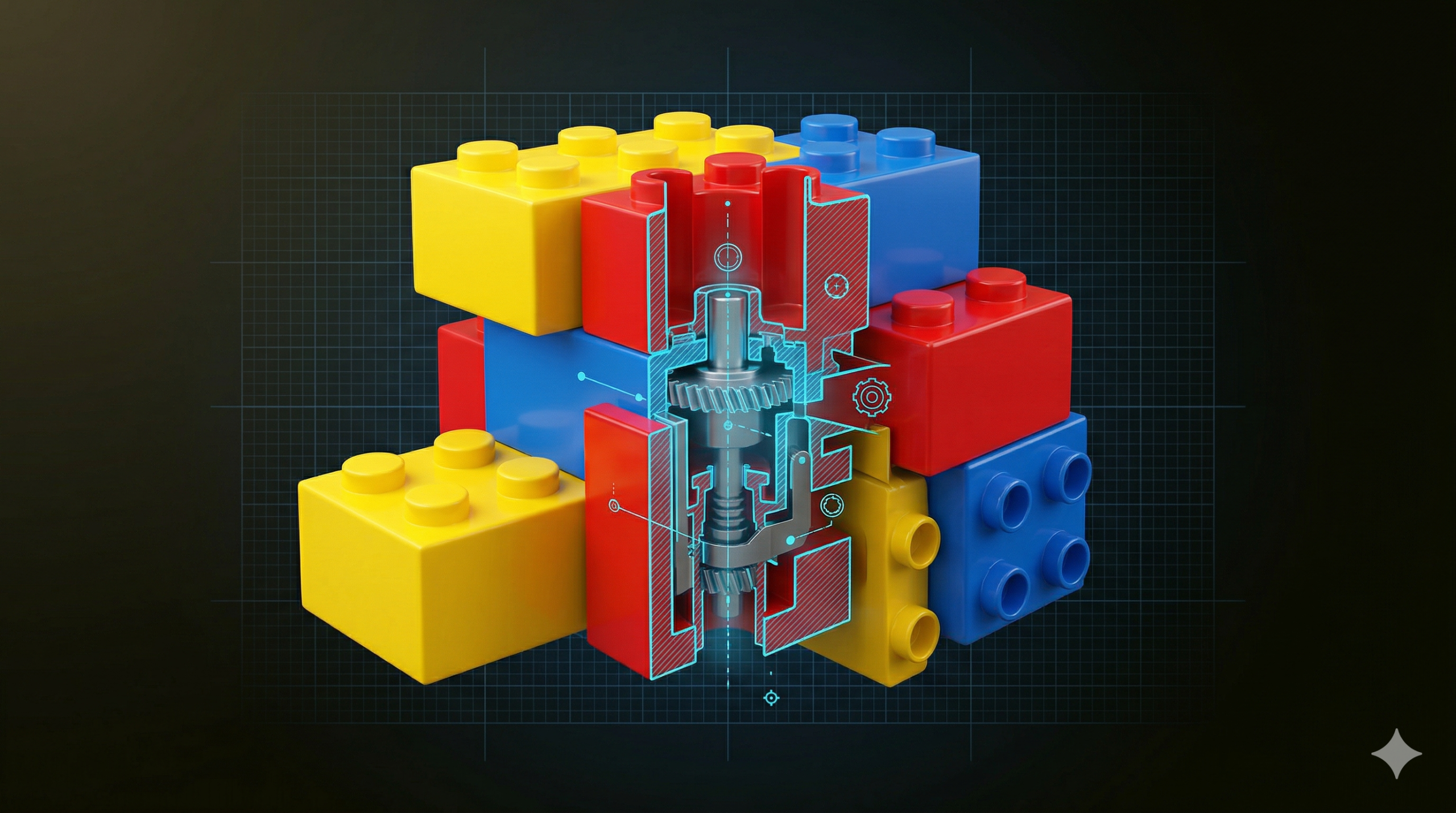
The fundamental patent protecting the LEGO brick interlocking system was filed in Denmark in 1958 and expired in 1978. That means the legal monopoly on the basic brick coupling mechanism has been gone for nearly half a century. Yet as of 2025, LEGO remains the world largest toy company by revenue, and no competitor producing compatible bricks has come close to displacing it. The question of why this is the case reveals one of the most instructive case studies in post-patent intellectual property strategy.
The answer lies not in any single legal mechanism, but in a layered defense combining trademark law, trade dress, copyright, design rights, and a range of business strategies that extend far beyond the courtroom. This article traces the arc from LEGO original patents through decades of litigation against competitors like Mega Bloks, landmark rulings at the Court of Justice of the European Union (CJEU) and the Supreme Court of Canada, and the current state of LEGO IP portfolio.
The Patent History: Godtfred Kirk Christiansen Invention
The patent that defined the modern LEGO brick was filed on January 28, 1958, by Godtfred Kirk Christiansen, son of LEGO founder Ole Kirk Christiansen. Granted in the United States as US Patent 3,005,282 in 1961, the patent covered the interlocking mechanism in which studs on the top of one brick engage with tubes on the underside of another, producing what LEGO engineers call clutch power, a precisely calibrated friction that allows bricks to hold together firmly while remaining easy for a child to separate.
LEGO continued filing improvement patents as its product line expanded into Duplo (larger bricks for younger children), Technic (gears, axles, and mechanical elements), and Minifigures (the iconic small human figures). But the core patent on the basic brick coupling expired in 1978, and with it, the legal barrier preventing anyone else from manufacturing compatible bricks.
The First Line of Defense: Trademark Registration of Brick Shapes
With its patent protection gone, LEGO turned to trademark law. Beyond the well-known LEGO word mark, the company sought to register the shape of the brick itself, specifically the distinctive arrangement of studs on its upper surface, as a three-dimensional trademark. The argument was that the brick shape had acquired secondary meaning and functioned as a source identifier in the minds of consumers.
This strategy failed decisively in Europe. In 2010, the Court of Justice of the European Union ruled in LEGO Juris A/S v. OHIM (Case C-48/09 P) that the LEGO brick shape consisted exclusively of features necessary to achieve a technical result, and therefore could not be registered as a trademark. The Court reasoned that allowing trademark protection for functional product shapes would effectively circumvent the time-limited nature of patent protection, granting a perpetual monopoly on what was meant to enter the public domain.
This ruling affirmed a principle of fundamental importance in intellectual property law: the functionality doctrine. Patent rights are deliberately time-limited. Trademark rights, which can be renewed indefinitely, must not be used as a vehicle to extend functional monopolies beyond patent expiration. The CJEU LEGO decision remains one of the most widely cited applications of this doctrine worldwide.
The Mega Bloks Wars: Two Decades of Litigation
LEGO most significant competitive threat came from Mega Bloks, a Canadian company (now owned by Mattel and branded as MEGA). Mega Bloks produced LEGO-compatible bricks at lower price points and rapidly gained market share throughout the 1990s and 2000s. LEGO responded with aggressive litigation across multiple jurisdictions.
The Canadian litigation proved pivotal. In 2005, the Supreme Court of Canada ruled in Kirkbi AG v. Ritvik Holdings Inc. that LEGO brick shape was primarily functional and could not be protected as an unregistered trademark or through the tort of passing off. The Court held that the functional features of the brick were in the public domain following patent expiration, and trademark law could not be used to recapture that monopoly.
German courts reached similar conclusions, invalidating LEGO three-dimensional trademark registrations for the basic brick shape. However, LEGO achieved an important victory regarding its Minifigure design. In 2022, the EU General Court upheld the three-dimensional trademark registration of the LEGO Minifigure (Case T-537/20), finding that its shape was not dictated by technical function but possessed inherent distinctiveness as a source identifier. This distinction between the functional brick and the non-functional Minifigure illustrates the nuanced application of the functionality doctrine.
Trade Dress and Unfair Competition: Alternative Legal Theories
After the failure of its trademark strategy for the basic brick, LEGO explored trade dress protection and unfair competition claims. Trade dress protects the overall commercial image or look and feel of a product when that image serves as a source identifier. In the United States, trade dress claims arise under Section 43(a) of the Lanham Act.
The functionality barrier proved equally formidable in the trade dress context. Because the stud-and-tube configuration of the LEGO brick is dictated by its interlocking function, trade dress protection for this feature is generally unavailable. Courts have consistently held that functional product features cannot receive trade dress protection, regardless of how strongly consumers associate those features with a particular brand.
LEGO has had greater success pursuing unfair competition claims against manufacturers that copy not just the brick system but also specific set designs, packaging, and marketing materials. Against Chinese counterfeiters in particular, LEGO Fair Play policy has supported aggressive legal action targeting trademark infringement, copyright infringement of instruction manuals, and passing off through confusingly similar packaging.
Copyright and Design Rights: LEGO Current IP Portfolio
While the basic brick shape cannot be protected through trademark or trade dress, LEGO maintains substantial protection through copyright and design rights. Copyright protects LEGO original creative works, including set packaging artwork, building instruction illustrations, and original character designs for proprietary themes such as Ninjago, Bionicle, and City. Licensed properties (Star Wars, Marvel, Harry Potter) are protected by their respective rights holders copyrights.
Design rights (known as design patents in the United States and registered designs in the EU) protect the ornamental appearance of specific LEGO elements, particularly specialized parts created for individual sets. The EU Registered Community Design system and national design registration systems provide protection for these elements, typically for up to 25 years.
LEGO strategic pivot toward these alternative forms of IP protection accelerated during the company near-bankruptcy in 2003-2004, when a combination of overexpansion and increased competition from compatible brick manufacturers pushed the company to its worst financial performance in history. The recovery that followed included a fundamental restructuring of LEGO legal and IP strategy.
Beyond Legal Protection: Why LEGO Still Dominates
Legal protection alone does not explain LEGO continued market dominance. Several business factors work in concert with the company IP strategy to maintain its competitive position.
Manufacturing precision is paramount. LEGO bricks are produced to tolerances of approximately 10 micrometers (0.01mm), ensuring consistent clutch power across bricks manufactured decades apart. This level of precision requires significant capital investment in injection molding equipment and quality control systems that most compatible brick manufacturers cannot match consistently.
Licensing strategy provides another layer of competitive advantage. LEGO exclusive or preferred licensing relationships with major entertainment properties, including Star Wars (Lucasfilm), Marvel and DC Comics (Disney and Warner Bros.), and Harry Potter (Warner Bros.), create product categories that compatible brick manufacturers cannot legally enter. These licensed sets represent a substantial portion of LEGO revenue.
Community engagement has become a core strategic asset. The LEGO Ideas platform, which allows fans to submit set designs for potential production, and the 2019 acquisition of BrickLink (the largest online marketplace for LEGO parts and sets) demonstrate LEGO investment in its AFOL (Adult Fans of LEGO) community. This brand loyalty represents an intangible asset that cannot be replicated through manufacturing capability alone.
The China Challenge: Counterfeiting and the Expanding Compatible Market
China represents both LEGO largest growth opportunity and its most significant enforcement challenge. Lepin, the most notorious Chinese counterfeiter, produced near-identical copies of LEGO sets at a fraction of the price, including copied instruction manuals. In 2019, Chinese authorities raided Lepin manufacturing facilities and seized approximately 140 million yuan (roughly $20 million) worth of products.
However, the shutdown of Lepin did not end the problem. New manufacturers including King, Mould King, and Cada have entered the market, some producing outright copies and others creating original designs using LEGO-compatible brick systems. European manufacturers such as BlueBrixx (Germany) and CoBi (Poland) have also established legitimate businesses producing original-design sets with LEGO-compatible dimensions.
The legal landscape here is nuanced. Since the basic brick coupling mechanism is in the public domain, manufacturing compatible bricks is entirely legal. What is not legal is copying LEGO specific set designs, reproducing copyrighted instruction manuals, using LEGO trademarks or confusingly similar branding, or producing counterfeit products that mislead consumers about the source of the goods.
Conclusion: Lessons in Post-Patent IP Strategy
The LEGO story offers a masterclass in what happens when a company foundational patent expires and it must find alternative ways to maintain competitive advantage. The CJEU and Canadian Supreme Court rulings established clear boundaries: trademark law cannot be used to extend functional monopolies beyond the patent term. The functionality doctrine is the gatekeeper that prevents the perpetual privatization of technical innovations.
Yet LEGO continued market dominance demonstrates that patents are only one dimension of competitive advantage. By combining copyright protection for creative works, design rights for ornamental elements, aggressive enforcement against counterfeiters, manufacturing precision that competitors struggle to match, strategic licensing of major entertainment properties, and deep investment in community and brand loyalty, LEGO has built a competitive position that has proven far more durable than any single patent.
The ongoing expansion of the compatible brick market, particularly from China, ensures that the legal and business dynamics surrounding LEGO will continue to evolve. For anyone interested in how intellectual property law interacts with business strategy, the LEGO brick remains one of the most fascinating case studies in existence.
この記事について
パテント探偵社 編集部
知的財産の世界で起きている出来事を、ジャーナリズムの手法で報道・分析する独立メディア。特許番号・法的根拠・当事者名を正確に記述しながら、専門家以外にも読みやすい記事を届けています。掲載内容は法的アドバイスではありません。

コメント