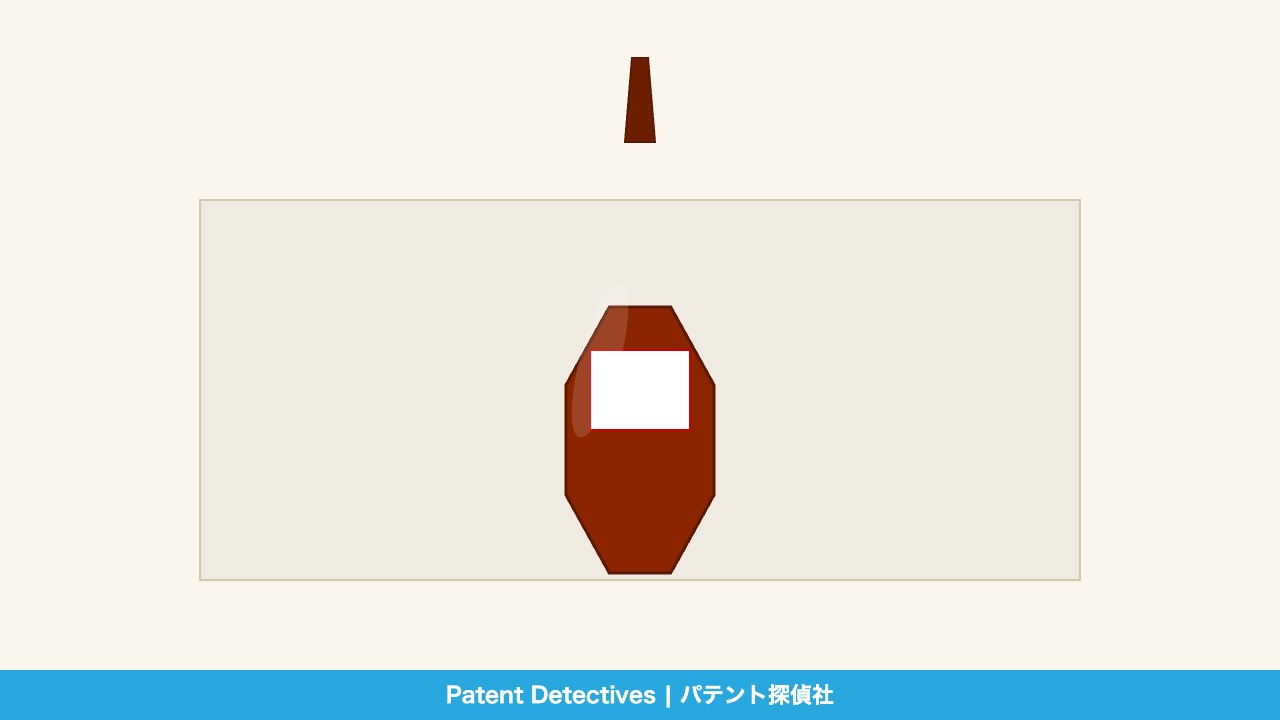
There’s a bottle most people recognize without being able to name it: the small Kikkoman soy sauce dispenser. Octagonal body, red cap, narrow spout. First released in 1961, it has sat on dining tables in Japan and around the world for over six decades.
What makes this bottle remarkable — beyond its ubiquity — is that it holds both a place in the Museum of Modern Art’s permanent collection and a registered three-dimensional trademark in Japan. An industrial product that achieved legal protection and artistic recognition simultaneously is unusual enough to be worth examining closely.
The Designer and the Brief
In 1960, Kikkoman commissioned product designer Kenji Ekuan to create a tabletop soy sauce dispenser. Ekuan was 33 years old and would go on to become one of Japan’s most influential industrial designers, leading GK Design Group for decades.
His approach was observational. He studied how people actually used soy sauce at the table: the pouring motion, the drip problem, the cap operation, the feel of the bottle in hand. The result addressed each of these functional issues through form.
Key design decisions included a narrow spout angled to minimize dripping and self-stop when tilted back; a multi-faceted body that provides grip; and a 100ml capacity sized for tabletop use rather than storage. The concept of a dedicated small-format tabletop dispenser was itself novel in Japan at the time.
The bottle went on sale in 1961 and became a fixture of the Japanese dining table within years.
MoMA and the Case for Industrial Design as Art
In 1999, the Museum of Modern Art added the Kikkoman soy sauce dispenser to its permanent collection. For a mass-produced industrial object from Japan, this was a significant recognition.
MoMA’s curatorial criteria for design objects center on aesthetic, cultural, and historical significance. The Kikkoman bottle qualified on all three: its elegant resolution of functional problems, its cultural saturation in Japanese food culture, and its influence on how tabletop condiment containers are designed globally.
Ekuan described his design philosophy as “problem-solving through beauty.” The bottle is a demonstration of that principle — a design that achieved commercial success not by compromising function for aesthetics but by pursuing both simultaneously.
The Three-Dimensional Trademark
Separately from its cultural status, the Kikkoman bottle holds a registered three-dimensional trademark in Japan — the same type of registration held by the Coca-Cola Contour Bottle and the Yakult container.
📋 Japan Trademark Registration No.: 4672571 (J-PlatPat)
The legal basis is Article 3(2) of Japan’s Trademark Act: acquired distinctiveness through long-term use. Over six decades of consistent commercial use with the same bottle form, Japanese consumers have come to associate this specific shape with Kikkoman soy sauce. Survey evidence supporting this consumer recognition was sufficient to satisfy the Japan Patent Office.
The Strategic Logic: From Design Right to Trademark
When the bottle was designed in 1961, Kikkoman would have held design rights protecting the visual appearance. In Japan, design rights last a maximum of 25 years from filing — meaning any design-based protection would have lapsed by the late 1980s at the latest.
Trademark rights, by contrast, can be renewed indefinitely as long as the mark remains in active commercial use. By the time the design right expired, Kikkoman had accumulated decades of consumer recognition — enough to qualify for three-dimensional trademark registration under the acquired distinctiveness standard.
The same pattern appears in the Yakult and Coca-Cola cases. Long-term use converts a time-limited design protection into potentially permanent trademark protection. The key variable is consistency: companies that frequently redesign their packaging cannot build the same recognition-based case.
When Function Becomes Culture
The Kikkoman bottle sits at an unusual intersection: a mass-production object that became an art museum acquisition and a registered trademark. These are three different systems of valuation — commercial, cultural, legal — all converging on the same physical form.
The trademark registration, in a sense, formalizes what the MoMA acquisition recognized culturally: this shape has become inseparable from the brand in the minds of people who encounter it. When a container becomes that embedded in daily experience, the law has a mechanism to protect it. In Japan, three-dimensional trademark registration is that mechanism.
Sources
- J-PlatPat (Japan Patent Information Platform)
- Kikkoman: Corporate History
- MoMA: Permanent Collection
- Japan Patent Office: Overview of the Trademark System
This article is for informational and entertainment purposes only and does not constitute legal advice. For specific IP questions, please consult a qualified patent attorney.
この記事について
パテント探偵社 編集部
知的財産の世界で起きている出来事を、ジャーナリズムの手法で報道・分析する独立メディア。特許番号・法的根拠・当事者名を正確に記述しながら、専門家以外にも読みやすい記事を届けています。掲載内容は法的アドバイスではありません。

コメント