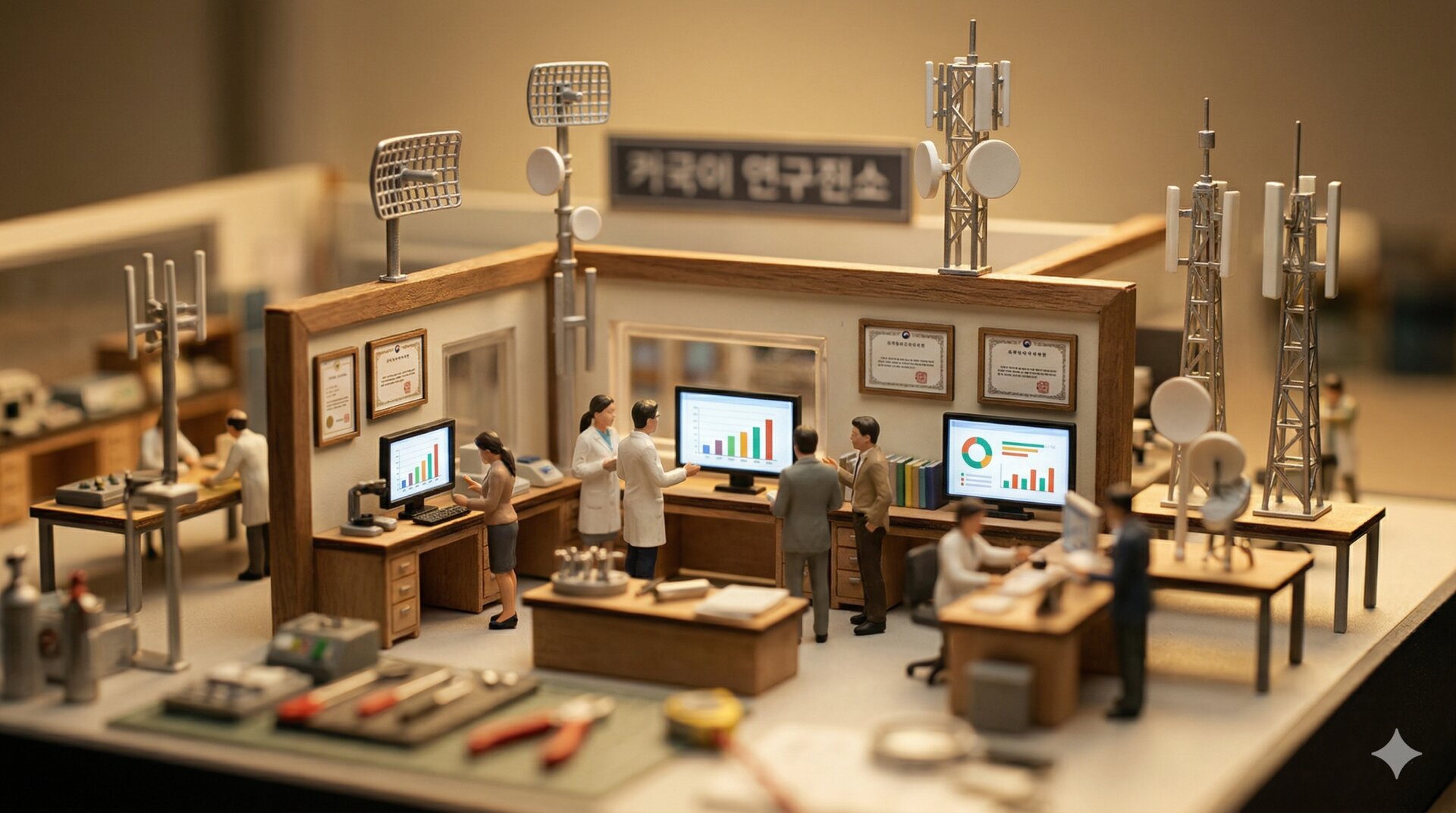
South Korea’s Electronics and Telecommunications Research Institute (ETRI), a government-affiliated research institution, announced on April 8, 2026, that its standard essential patent (SEP) portfolio generated licensing revenues of 50.2 billion Korean won (approximately USD 33.9 million) during 2025 — the highest annual total in the organization’s history. The cumulative licensing revenue across the three-year period from 2023 through 2025 reached 131.3 billion won (approximately USD 88.9 million), according to the ETRI announcement.
ETRI holds a substantial portfolio of SEPs covering a range of wireless communication standards, with 5G-related patents forming the core of its licensing program. The record revenue figure reflects both the continued expansion of 5G device adoption globally and the outcomes of ETRI’s multi-year licensing strategy.
ETRI’s Role in Standards Development and SEP Accumulation
ETRI is a state-funded research organization operating under the auspices of the South Korean government. For decades, ETRI researchers have contributed to international standardization bodies including the International Telecommunication Union (ITU) and the 3rd Generation Partnership Project (3GPP), where technical contributions that are adopted into standards give rise to standard essential patent rights. A patent is designated as “standard essential” when implementation of the standard — by any device or service — necessarily requires use of the patented technology.
Under the prevailing framework for SEP licensing, patent holders are obligated to offer licenses on FRAND (fair, reasonable, and non-discriminatory) terms to any implementer who seeks a license. ETRI’s portfolio encompasses patents relevant to 5G infrastructure and devices, Wi-Fi implementations, codec technologies, and other communications standards, and the institution has pursued licensing negotiations with a broad range of device manufacturers, network equipment vendors, and consumer electronics companies internationally.
Drivers of the Revenue Increase
Several factors contribute to the record 2025 revenue figure. The most structurally significant is the ongoing global expansion of 5G device adoption. As 5G-capable smartphones, industrial IoT devices, and fixed wireless access equipment become increasingly prevalent across major markets — including the United States, Europe, China, and Japan — the addressable pool of devices subject to ETRI’s 5G SEP licensing program grows correspondingly. SEP licensing structures typically tie royalty payments to device unit sales, so expanding markets translate directly into higher licensing revenues without requiring renegotiation of existing license terms.
Additionally, ETRI’s sustained investment in its licensing infrastructure over recent years — including technical essentiality analyses, claim charting, and licensing negotiations — has matured during this period. Building and enforcing an SEP portfolio requires sustained institutional effort: demonstrating that patents are valid, technically essential to the standard, and infringed by unlicensed implementers is a process that unfolds over years and often involves litigation or arbitration in multiple jurisdictions. The three-year cumulative figure of 131.3 billion won (USD 88.9 million) reflects the returns on this sustained effort.
Position in the Global SEP Market
The global SEP licensing market is dominated by a relatively small number of large private actors — Qualcomm, Ericsson, Nokia, InterDigital, and Huawei are among the most prominent holders of 5G SEP portfolios. ETRI’s position as a public research institution within this commercial ecosystem is comparatively unusual. Most major SEP portfolios are held by the companies that manufacture the products subject to licensing, creating a reciprocal licensing dynamic. ETRI, by contrast, does not manufacture telecom equipment, positioning it as a pure licensing entity with respect to its SEP portfolio.
This structure raises questions that the ETRI record revenue announcement brings into focus: what does FRAND mean for a non-practicing entity that is simultaneously a public research institution, and how should national courts and arbitration bodies calibrate FRAND royalty determinations when the licensor is not itself an implementer subject to cross-licensing? These questions do not have settled answers, and their resolution varies across jurisdictions.
Ongoing SEP Policy Context
The ETRI announcement comes at a moment of heightened policy attention to SEP licensing globally. In 2024, the European Commission proposed a new SEP Regulation intended to introduce transparency requirements and mediation procedures for SEP licensing negotiations — a proposal that has remained under active debate. In the United States, the Department of Justice withdrew earlier guidance on SEP licensing and antitrust considerations, a move that has influenced ongoing litigation involving companies including Samsung and Netlist. In this environment, ETRI’s ability to generate record SEP revenues signals the continued commercial viability of the SEP licensing model for research institutions, while also underscoring the stakes of ongoing policy debates over FRAND terms and licensing conditions.
This development was reported by IPWatchdog on April 10, 2026.
この記事について
パテント探偵社 編集部
知的財産の世界で起きている出来事を、ジャーナリズムの手法で報道・分析する独立メディア。特許番号・法的根拠・当事者名を正確に記述しながら、専門家以外にも読みやすい記事を届けています。掲載内容は法的アドバイスではありません。


コメント