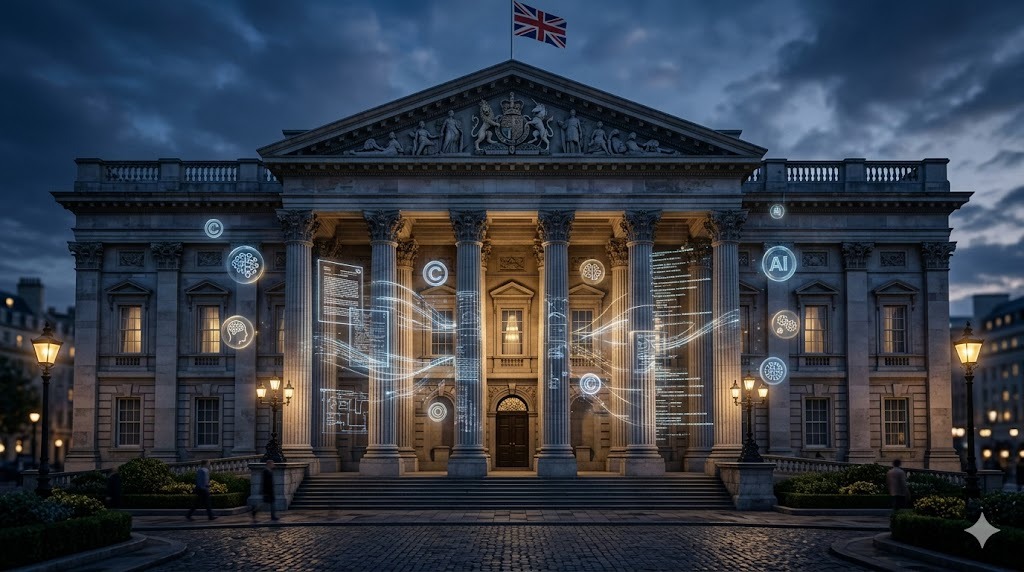
The UK Intellectual Property Office (IPO) published its Corporate Plan 2026 to 2027 on May 11, 2026, setting out the agenda for the final year of the IPO’s three-year strategy “IP for a creative and innovative UK 2024 to 2027.” The 20-page document organises the year’s work into five priority areas: continuing the One IPO Transformation programme, strengthening the UK IP framework (including the government’s positions on AI and copyright, and reforms to standard-essential patents and designs), supporting SMEs, building organisational capability, and modernising corporate systems including the adoption of AI.
UK IPO Chief Executive and Comptroller General Adam Williams said the plan reflects “the meaningful progress we have made, and our focus on realising our strategic aims as we enter into this final year of our current strategy.” Williams noted that the IPO is “pressing ahead with modernising our services — including the next phase of our One IPO transformation programme” and emphasised the importance of keeping the IP framework aligned with rapid technological change.
One IPO Transformation
The first priority is the One IPO Transformation programme, which is migrating IPO operations onto a single, integrated digital platform. Patent services have already been moved to the One IPO platform. In 2026-27, the plan focuses on embedding and enhancing the One IPO patents service, beginning the trade marks transformation phase, and decommissioning legacy systems in parallel. Maintaining uninterrupted customer service is a stated precondition.
AI and copyright, SEPs and designs
The second priority is strengthening the UK IP framework. On AI and copyright, the IPO commits to continuing work on the government’s chosen actions, which span rights-holder protection where AI models are trained on copyrighted material, the scope of any text and data mining exception, and the treatment of generative AI outputs. The Corporate Plan signals that the IPO will move from policy debate to implementation on these issues over the coming year.
On standard-essential patents (SEPs), the IPO will progress reforms. The agency has spent recent years exploring options to improve transparency in SEP licensing negotiations, refine the operation of FRAND (fair, reasonable and non-discriminatory) terms, and strengthen dispute resolution. Designs reform is also part of the agenda, including updating the post-Brexit designs framework. Tackling IP crime through stronger enforcement and improved collaboration with partner agencies is a further commitment.
SME support and workforce
The third priority is supporting small and medium-sized enterprises (SMEs) in using IP for growth. The plan aims to improve SMEs’ access to IP skills, advice and finance, so that they “start, scale and stay in the UK.” Likely workstreams include making it easier for startups to raise IP-backed financing, expanding IP education programmes, and strengthening collaboration with regional SME support networks.
The fourth priority concerns organisational capability — strengthening leadership and workforce, delivering the strategic workforce plan, and embedding a culture of accountability, adaptability and connection. The fifth priority is modernising IPO corporate systems and adopting AI to improve operational efficiency and customer experience. This is expected to span patent and trade mark examination support, search-tool enhancements, and customer-facing service improvements.
Context within the wider policy debate
This Corporate Plan implements the final year of the three-year strategy that runs through 2027. Earlier this year, in February 2026, the UK Supreme Court ruled in Emotional Perception AI v. Comptroller General of Patents, Designs and Trade Marks that the long-standing Aerotel test for patent eligibility should no longer be followed, aligning UK practice with the European Patent Office’s “any hardware” approach. The IPO subsequently revised its examination practice for AI-related inventions. On AI and copyright, the government has consulted on a range of options since 2025, and the Corporate Plan reflects a move toward implementation rather than further consultation.
With reforms to SEPs and designs, implementation of AI and copyright policy, SME support, and an ambitious internal digital transformation programme, the IPO is concentrating a wide-ranging agenda into its 2026-27 year. Progress in this final year of the current strategy will shape the direction of the next strategy cycle from 2027 onwards.
この記事について
パテント探偵社 編集部
知的財産の世界で起きている出来事を、ジャーナリズムの手法で報道・分析する独立メディア。特許番号・法的根拠・当事者名を正確に記述しながら、専門家以外にも読みやすい記事を届けています。掲載内容は法的アドバイスではありません。


コメント